The Role of Explosion Proof Digital Cameras in ATEX Zones

In hazardous industrial environments, safety is not just a priority — it’s a necessity. Whether it’s a chemical plant, oil refinery, or a mining site, the risk of fire or explosion due to flammable gases, vapors, or dust is ever-present. In such environments, conventional equipment can pose a serious threat. This is where Explosion Proof Digital Cameras, especially in ATEX Zones, become essential.
What Are ATEX Zones?
ATEX stands for Atmosphères Explosibles, a European Union directive that governs equipment used in explosive atmospheres. These zones are classified based on the frequency and duration of explosive atmospheres:
- Zone 1: An area where an explosive atmosphere is likely to occur in normal operation.
- Zone 2: An area where an explosive atmosphere is not likely to occur, and if it does, it will exist only for a short time.
To operate safely within these zones, equipment must meet strict certification standards, including structural integrity, spark containment, and thermal safety. Explosion proof digital cameras that are ATEX certified are designed specifically to meet these requirements.
Why Explosion Proof Cameras Are Needed in ATEX Zones
Explosion proof cameras serve several vital purposes in ATEX zones:
1. Safe Monitoring in Risky Environments
Industries need constant visual monitoring for operations, safety, and compliance. However, using regular cameras in explosive environments is a hazard. Explosion proof cameras are built to withstand extreme temperatures, pressure, and contain any sparks or ignition sources, making them suitable for real-time monitoring without compromising safety.
2. Accident Prevention and Investigation
By offering real-time visual feeds, explosion proof cameras help detect irregularities before they become dangerous incidents. In the event of an accident, the recorded footage becomes crucial for investigating causes, preventing future occurrences, and maintaining safety documentation.
3. Remote Surveillance and Operational Efficiency
With remote access capabilities, explosion proof digital cameras allow teams to monitor live operations from safe distances. This eliminates the need to enter hazardous zones frequently, enhancing both safety and operational efficiency.
Features That Make a Camera Explosion Proof
Not every rugged camera qualifies as explosion proof. Certified explosion proof digital cameras include the following safety features:
- Flameproof Enclosures: Designed to contain any internal explosion and prevent it from igniting the surrounding atmosphere.
- Temperature Control: Regulated surface temperature to ensure the camera does not reach ignition temperature.
- Corrosion-Resistant Housing: Typically made from stainless steel or anodized aluminum for longevity in chemically aggressive environments.
- ATEX/IECEx Certification: Globally recognized safety standards proving the camera is safe for use in explosive atmospheres.
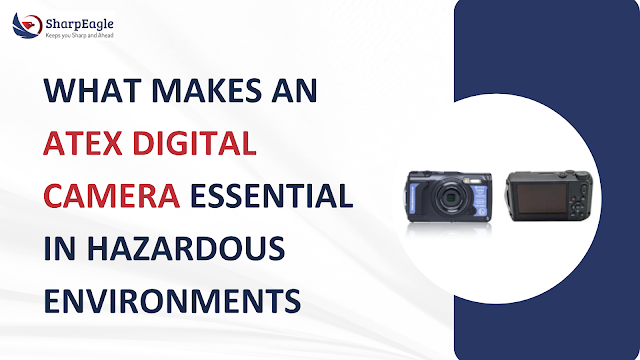
SharpEagle, for example, provides explosion proof cameras that meet ATEX Zone 1 and Zone 2 certifications, ideal for use in oil & gas, petrochemical, and mining industries.
Key Applications in Different Industries
ATEX digital cameras play a critical role across a variety of sectors operating in ATEX zones:
Oil & Gas
From drilling platforms to refineries, ATEX zones are common. Explosion proof cameras are used for pipeline monitoring, leak detection, and emergency response coordination.
Chemical Manufacturing
Chemical plants often deal with volatile substances. These cameras provide real-time process visibility, ensuring any irregular activity is detected early.
Mining and Tunneling
Mining operations are high-risk zones with the presence of combustible dust and gases. Cameras aid in equipment monitoring, personnel tracking, and safety auditing.
Marine & Offshore
On offshore rigs and vessels handling flammable cargo, explosion proof cameras are vital for deck monitoring, machinery surveillance, and accident documentation.
Benefits of Using Explosion Proof Cameras in ATEX Zones
- Improved Workplace Safety: Reduces the need for human presence in hazardous areas.
- Regulatory Compliance: Meets safety regulations like ATEX, IECEx, and OSHA.
- Durability: Built to withstand harsh environmental conditions like high humidity, dust, and corrosion.
- Cost-Efficient: Prevents costly downtimes and accidents through proactive monitoring.
- Versatile Installations: Wall-mounted, pole-mounted, or PTZ (pan-tilt-zoom) setups provide flexibility.
Choosing the Right Explosion Proof Camera
When selecting a camera for ATEX zones, consider:
- Zone classification (Zone 0, 1, or 2)
- Certifications (ATEX, IECEx, UL)
- Video quality (HD/Full HD for clear visuals)
- Connectivity (Ethernet, Wi-Fi, or 4G)
- Environment resistance (IP66/67 ratings)
Brands like SharpEagle Technology provide a complete range of explosion proof solutions tailored to various industrial needs, ensuring not just safety but also seamless integration into existing monitoring systems.
Final Thoughts
Explosion proof digital cameras are not just tools — they are lifelines in ATEX zones. They provide critical visual data that enhances safety, supports compliance, and optimizes operations in explosive and high-risk environments.
With growing industrial safety regulations and a greater focus on workplace safety, adopting ATEX-certified explosion proof cameras is no longer optional, it’s essential. If your facility operates in explosive atmospheres, it’s time to invest in a solution that’s engineered to protect both your people and your property.
Comments
Post a Comment