Posts

Showing posts with the label Intrinsically Safe Digital Cameras

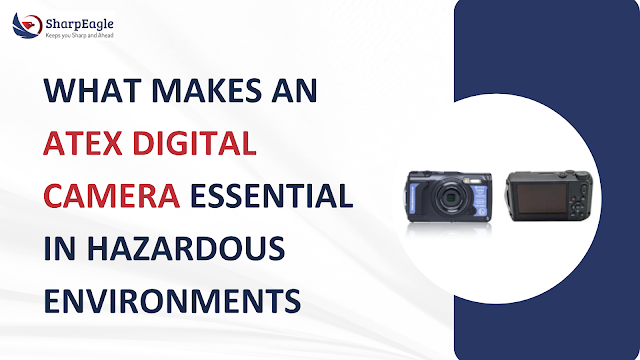
What Makes an ATEX Digital Camera Essential in Hazardous Environments
Image
In industrial sectors like oil & gas, chemical plants, mining, and marine operations, safety is not just a priority — it’s a necessity. Capturing images and videos in these high-risk zones requires specially designed equipment that adheres to stringent safety standards. This is where ATEX Digital Cameras come into play. Engineered for performance in explosive atmospheres, they are not just tools — they’re lifesaving assets. Below, we explore what makes an ATEX Digital Camera in hazardous environments essential and how it differs from regular imaging devices. Understanding ATEX Certification ATEX (Atmosphères Explosibles) is a European certification given to equipment used in potentially explosive environments. An ATEX Digital Camera is tested and certified to operate safely in zones where flammable gases, vapors, or dust may be present. Without this certification, the use of regular cameras could pose ignition risks — leading to catastrophic consequences. 1. Safety First: Built for...

Buying Guide: ATEX Certified Digital Cameras in the Middle East

Image
In high-risk industrial zones across the Middle East — such as oil refineries, chemical plants, gas processing units, and mining operations —  safety and surveillance  go hand-in-hand. Monitoring operations in such explosive atmospheres demands more than standard equipment. That’s where ATEX certified digital cameras step in, offering unmatched safety, durability, and performance. If you’re looking to invest in  explosion proof digital cameras  for hazardous environments, this comprehensive buying guide will help you make informed decisions. Why Choose ATEX Certified Digital Cameras? ATEX certification ensures that electronic devices like cameras are safe to operate in potentially explosive atmospheres. This European directive categorizes equipment for use in zones where flammable gases, vapors, or dust are present. In industries across the Middle East, adopting ATEX digital cameras is not just a regulatory requirement — it’s a critical step toward preventing acciden...

Key Features to Look for in an Explosion Proof Digital Camera

Image
In hazardous industrial environments — such as oil refineries, chemical plants, or offshore drilling rigs — standard surveillance equipment simply won’t cut it. These locations require cameras that not only deliver high-quality video but also ensure operational safety. Enter the  Explosion Proof Digital Camera  — a robust solution designed to operate reliably in environments with flammable gases, vapors, dust, or fibers. However, not all explosion-proof cameras are created equal. Whether you’re upgrading your existing surveillance system or purchasing for a new hazardous site, here are the key features to look for in an explosion-proof digital camera. 1. ATEX and IECEx Certification The most critical feature is compliance with global safety standards. Look for cameras certified under: ATEX (EU Directive)  for explosive atmospheres IECEx (International Electrotechnical Commission System) UL or CSA (for North American markets) These certifications confirm that the camera ha...

Explosion Proof Digital Camera vs. Regular Camera: What’s the Difference

Image
When it comes to monitoring hazardous environments such as oil refineries, chemical plants, or mining sites, safety is the top priority. In these critical zones, using standard electronic equipment — including cameras — can be extremely risky. That’s where  Explosion Proof Digital Cameras  come into play. But what exactly sets them apart from regular cameras? Let’s explore the key differences. 1. Design and Construction Explosion Proof Digital Camera:  Explosion-proof cameras are specially designed to operate safely in potentially explosive atmospheres. They are encased in rugged, certified housings (typically made of stainless steel or aluminum alloy) that can withstand external impacts, prevent internal sparks from escaping, and keep out flammable gases or dust. Regular Camera:  Standard cameras are built for general environments — offices, homes, or open spaces — where there is no threat of explosion. These cameras are not built to resist harsh industrial elements...

Future of Industrial Surveillance: Explosion Proof Digital Camera Innovations

Image
In industries such as oil & gas, chemical processing, mining, and manufacturing, safety and security are non-negotiable. These environments often involve explosive gases, flammable dust, and volatile materials that require specialized monitoring solutions. Traditional surveillance systems simply can’t withstand such conditions, which is why  explosion proof digital cameras  have become an essential component of industrial surveillance. But as technology continues to evolve, so do the capabilities of these rugged devices. In this blog, we explore the future of industrial surveillance and how explosion proof digital camera innovations are reshaping safety and monitoring practices in hazardous environments. What Makes a Camera “Explosion Proof”? Before diving into innovations, it’s important to understand what qualifies a camera as explosion proof. These cameras are housed in specially engineered enclosures that prevent sparks or high temperatures from escaping and igniting e...